
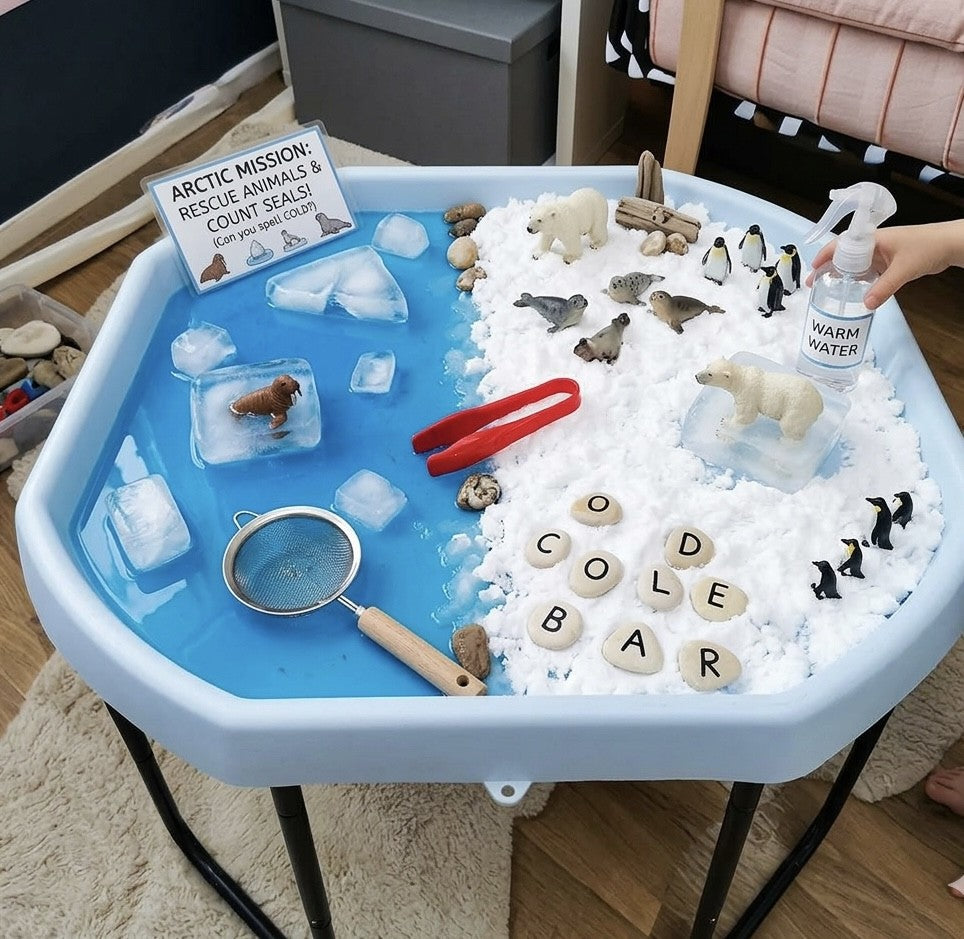
Sensory play offers children a hands-on way to explore the world around them. When combined with a fun theme like the Arctic, it becomes an exciting learning adventure. Imagine frozen animals trapped inside blocks of ice, waiting to be freed. Children can experiment with different methods to melt the ice, discovering how warm water, salt, baking soda, and vinegar affect the frozen environment. This activity not only sparks curiosity but also encourages problem-solving, fine motor skills, and scientific thinking.

Close-up view of a block of ice with a frozen polar bear inside
Frozen polar bear trapped in a clear ice block, ready for sensory pla
Setting Up the Arctic Sensory Play
Creating an Arctic-themed sensory play setup is simple and requires minimal materials. Here’s what you need:
Small plastic or rubber Arctic animals (polar bears, seals, penguins, arctic foxes)
Water and containers for freezing
Salt, baking soda, vinegar, and warm water for melting experiments
A tray or shallow bin to contain the ice blocks and water
Tools like droppers, spoons, or small spray bottles for applying liquids
How to Freeze the Animals
Place the Arctic animal toys inside containers filled with water.
Freeze them overnight to create solid ice blocks with animals trapped inside.
Prepare several blocks to allow multiple children to explore at once.
This setup mimics the icy Arctic environment and gives children a tangible challenge: how to rescue the animals from their frozen prisons.
Exploring Different Ways to Melt Ice
Children can try various methods to melt the ice. Each method introduces a basic scientific concept and offers a different sensory experience.
Warm Water
Pouring warm water over the ice speeds up melting by transferring heat. This method is straightforward and visually satisfying as the ice quickly begins to drip and crack.
- Use a small cup or dropper to control the water flow.
- Observe how the ice melts faster where the water touches.
Salt
Sprinkling salt on ice lowers its freezing point, causing it to melt even in cold conditions. This chemical reaction fascinates children as they see the ice dissolve more quickly in salty areas.
- Use table salt or rock salt.
- Notice the texture change as the ice becomes slushy.
Baking Soda and Vinegar
Combining baking soda and vinegar creates a fizzy reaction that can help break down the ice surface. This method adds an element of surprise and excitement.
- Sprinkle baking soda on the ice.
- Pour vinegar over it and watch the bubbles form.
-
The fizzing helps weaken the ice, making it easier to chip away.
Tools for Melting
Provide tools like droppers, spoons, or small spray bottles to let children apply these substances precisely. This encourages fine motor skills and control.
Learning Through Play
This sensory activity supports multiple areas of development:
Science: Children learn about states of matter, temperature effects, and chemical reactions.
Motor Skills: Handling tools and manipulating ice blocks improve hand-eye coordination.
Problem Solving: Deciding which method works best to free the animals promotes critical thinking.
Language: Describing what they see and predict builds vocabulary and communication skills.
Encourage children to talk about their observations. Ask questions like:
What happens when you pour warm water on the ice?
How does the salt change the ice?
Which method melts the ice fastest?
Tips for Success
Use clear containers to freeze the animals so children can see them inside the ice.
Freeze the blocks in different sizes to vary the challenge.
Keep towels or cloths nearby to manage water spills.
Supervise children closely, especially when using vinegar or salt.
Extend the activity by adding Arctic-themed books or videos to deepen understanding
Variations to Try
Freeze coloured water to add visual interest.
Include small natural materials like twigs or leaves to simulate the Arctic environment.
Use different animal figures to explore other habitats.
Time how long each melting method takes and record results for a simple experiment.
This sensory play setup offers endless opportunities for creativity and learning.