
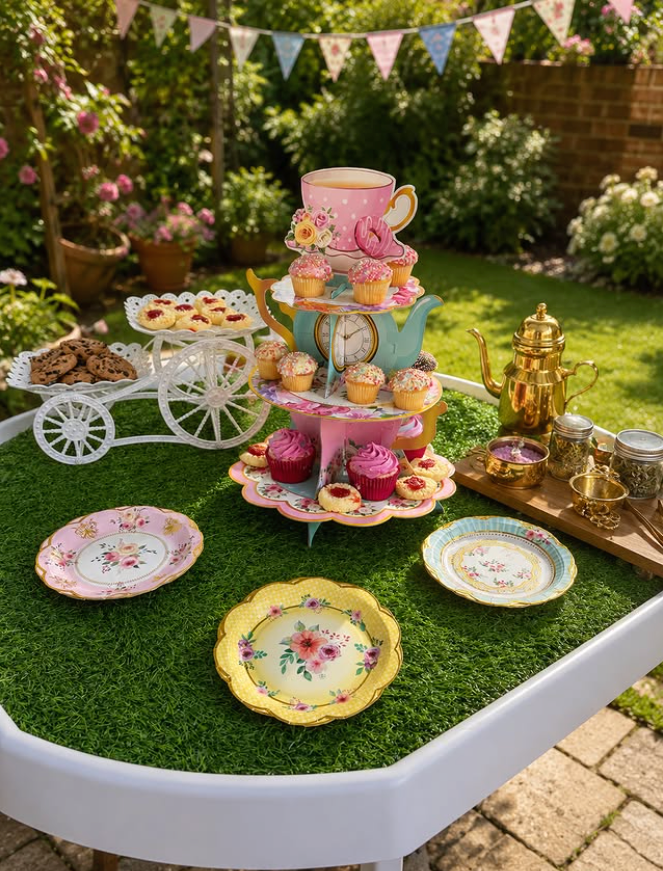
Engaging children in imaginative play can transform ordinary moments into hours of fun and learning. Today’s creative play setup started with a charming tea party using everyday kitchen items, then evolved into an exciting potion-making adventure. This post shares how simple materials sparked endless entertainment and sensory exploration for kids.
Setting the Scene: A Tea Party with a Twist
The play began with a tea party theme, but instead of traditional tea, the table featured kitchen staples like lentils, flour, soup mix, and chia seeds. These items added texture and variety, making the setup more tactile and interesting for children. Beautiful tea party elements such as small cups, saucers, and spoons created an inviting atmosphere.
This approach encourages kids to use their imagination and practice social skills as they “serve” and “taste” their creations. The different textures of the ingredients also provide sensory stimulation, which is important for young children’s development.
Tips for Creating Your Own Tea Party Play
- Use a variety of dry kitchen ingredients to add texture and colour.
- Include small utensils and cups to mimic a real tea party.
- Encourage children to describe the “Flavors” and textures they experience.
- Let kids take turns being the host or guest to build social interaction.
This simple setup kept the children entertained for hours, showing how everyday items can inspire creative play without needing expensive toys.
Transforming Play: From Tea Party to Potion Lab
After the tea party, the play shifted to a potion-making activity. This transition kept the excitement alive and introduced basic science concepts through hands-on experimentation.
The green potion was made by mixing bicarbonate of soda with dish liquid and food colouring. This created a bubbly, colourful mixture that fascinated the kids. To add fizz, a separate mix of water and vinegar was prepared. When combined, the fizzing reaction delighted the children and sparked curiosity about cause and effect.
Milk was also added back into the tea party ingredients to change the texture and create new sensory experiences. This blending of themes kept the play dynamic and engaging.

How to Set Up Potion Play Safely
- Use safe, non-toxic ingredients like baking soda, dish soap, vinegar, and food colouring.
- Prepare small batches to avoid mess and waste.
- Supervise children closely during mixing and pouring.
- Encourage kids to observe changes and describe what they see and feel.
Potion play not only entertains but also introduces children to basic chemistry concepts in a fun, hands-on way. It promotes curiosity, observation skills, and fine motor development.
Adding Texture and Variety with Milk and Kitchen Ingredients
Reintroducing milk to the tea party ingredients created a new sensory layer. The milk softened the dry ingredients, making them easier to mold and mix. This change in texture gave children a fresh way to interact with the materials and extended the playtime.
Combining different elements from the tea party and potion play encouraged children to experiment and use their creativity. They could imagine new recipes, textures, and effects, which kept their interest high.

Ideas for Extending Sensory Play
- Add small tools like spoons, scoops, or brushes for mixing and shaping.
- Introduce natural scents like vanilla or cinnamon for an extra sensory dimension.
- Use trays or shallow containers to contain the mess and make cleanup easier.
- Encourage storytelling around the textures and colours to boost language skills.
Sensory play like this supports cognitive development and helps children explore their environment in a safe and enjoyable way.