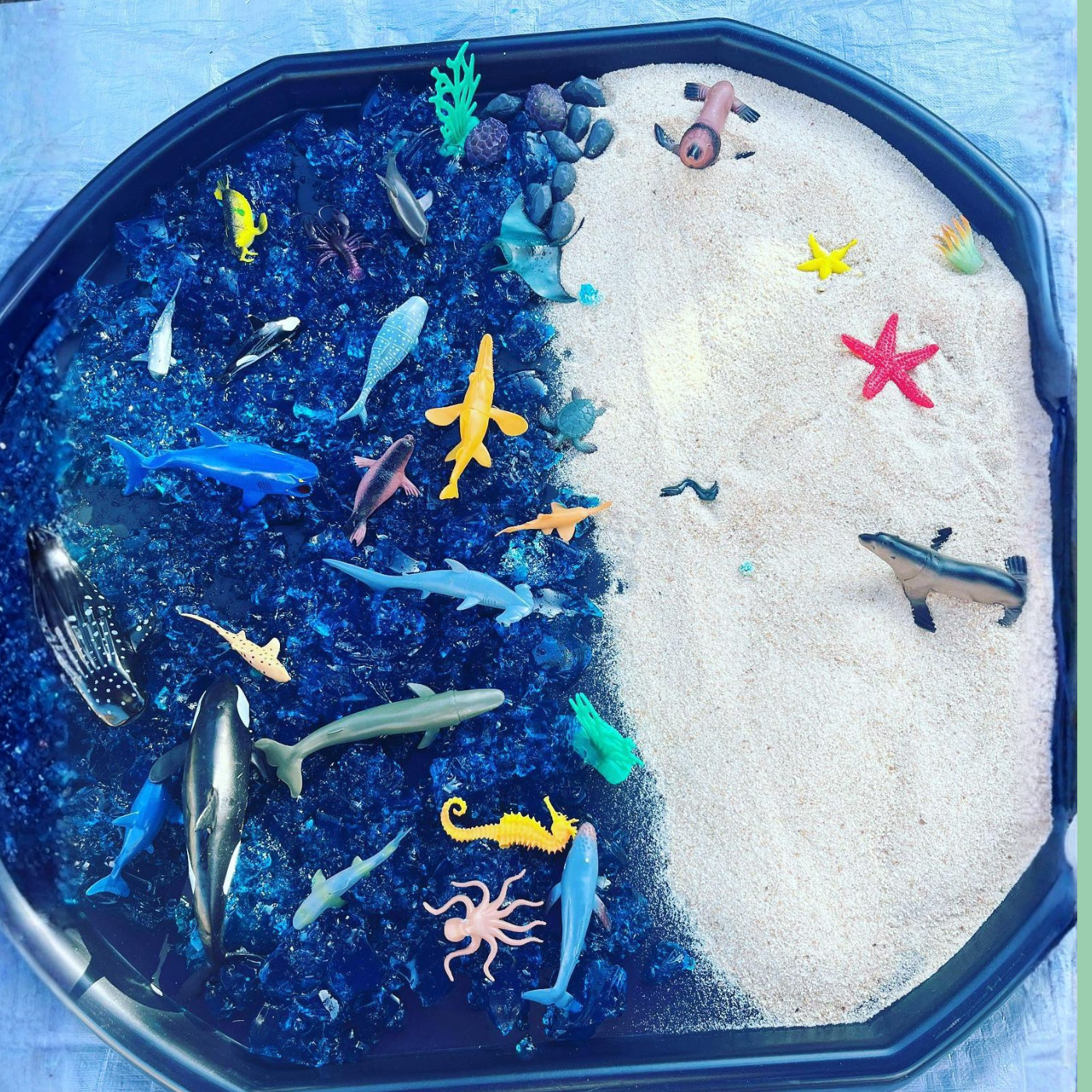
Engaging children in sensory play helps develop their creativity, fine motor skills, and understanding of the world around them. An ocean-themed tuff tray setup offers a hands-on way to explore marine life and textures while sparking curiosity. This post guides you through creating a vibrant ocean scene using chia slime, frozen animals in a food container, blue jelly, and playground washed sand. You will find practical tips on making each element and ideas for displaying them to create an inviting, educational play space.
Setting Up the Base with Playground Washed Sand
Start by preparing the base of your tuff tray. Playground washed sand is ideal because it is clean, fine, and safe for children to handle. Spread a thin layer evenly across the tray to mimic the ocean floor. This sandy texture provides a natural foundation for the other sensory materials and adds a tactile element that children enjoy exploring.
- Use about 2 to 3 cups of playground washed sand for a standard-sized tuff tray.
- Level the sand with your hands or a small flat tool to create a smooth surface.
- Optionally, add small shells or pebbles to enhance the beach effect.
This sandy base encourages imaginative play and gives children a realistic feel of the ocean shore.
Making Chia Slime for a Unique Sensory Experience
Chia slime adds an exciting texture that is both gooey and slightly crunchy due to the chia seeds. It resembles seaweed or underwater plants, fitting perfectly into the ocean theme.
Ingredients and Materials
- 1 cup water
- 2 tablespoons chia seeds
- Blue food colouring or natural blue dye
- A mixing bowl and spoon
- Tuff Tray and Stand BUY NOW
- Or Tuff Trays - White, Black or Beige BUY NOW
Instructions
- Mix the chia seeds with water in the bowl.
- Add a few drops of blue food colouring and stir well.
- Let the mixture sit for about 30 minutes to an hour until it thickens and forms a gel-like consistency.
- Stir again before placing it in the tuff tray.
The chia slime’s texture invites children to squish, stretch, and observe the seeds’ transformation. It also introduces a natural element that differs from typical slime recipes.
Creating Blue Jelly to Represent Ocean Water
Blue jelly adds a translucent, wobbly texture that mimics the ocean’s surface. It contrasts nicely with the sand and chia slime, offering a different sensory feel.
How to Prepare Blue Jelly
- Use a store-bought jelly mix or make homemade jelly using gelatine and blue food colouring.
- Prepare according to package instructions or recipe.
- Pour the jelly into a shallow container and refrigerate until set.
- Cut the jelly into small cubes or shapes before adding to the tuff tray.
Place the jelly pieces strategically in the tray to represent water pools or waves. The cool, soft jelly invites children to touch and explore temperature and texture differences.
Adding Frozen Animals in a Food Container for Discovery Play
Frozen animals add an element of surprise and discovery. Using a clear food container allows children to see the animals trapped in ice, encouraging them to experiment with melting and freeing the creatures.
How to Prepare Frozen Animals
- Select small plastic ocean animals such as fish, turtles, or dolphins.
- Place the animals in a shallow food container.
- Fill the container with water and freeze overnight.
- Remove the ice block and place it in the tuff tray.
Children can use tools like droppers with warm water or simply their hands to melt the ice. This activity teaches patience, cause and effect, and fine motor skills.
Display Tips for an Inviting Ocean Scene
Arranging the materials thoughtfully enhances the play experience. Here are some tips for displaying your ocean-themed tuff tray:
- Place the playground washed sand on one side to represent the shore.
- Arrange chia slime in clusters to resemble seaweed or coral.
- Scatter blue jelly pieces around the tray to simulate water.
- Position the frozen animal ice block centrally for easy access.
- Add small props like shells, pebbles, or toy boats to enrich the scene.
- Labelling each section with simple cards can also add an educational layer, introducing vocabulary like “sand,” “seaweed,” and “jellyfish.”
Safety and Cleanup Considerations
- Always supervise children during sensory play, especially with small items like chia seeds or plastic animals.
- Use non-toxic food colouring and safe materials.
- Have wipes or towels handy for sticky or wet messes.
- Store leftover materials properly for reuse or dispose of them responsibly.
Sensory play can get messy, but the benefits for learning and development make it worthwhile.