Rainy days can put a damper on outdoor play, but they don’t have to stop children from having fun and learning. A tuff tray is a versatile tool that transforms any indoor space into a creative play zone. It offers a contained area where kids can explore textures, colours, and imaginative scenarios without making a mess. If you’re looking for easy and engaging tuff tray play ideas to brighten up those gloomy days, this guide has you covered.
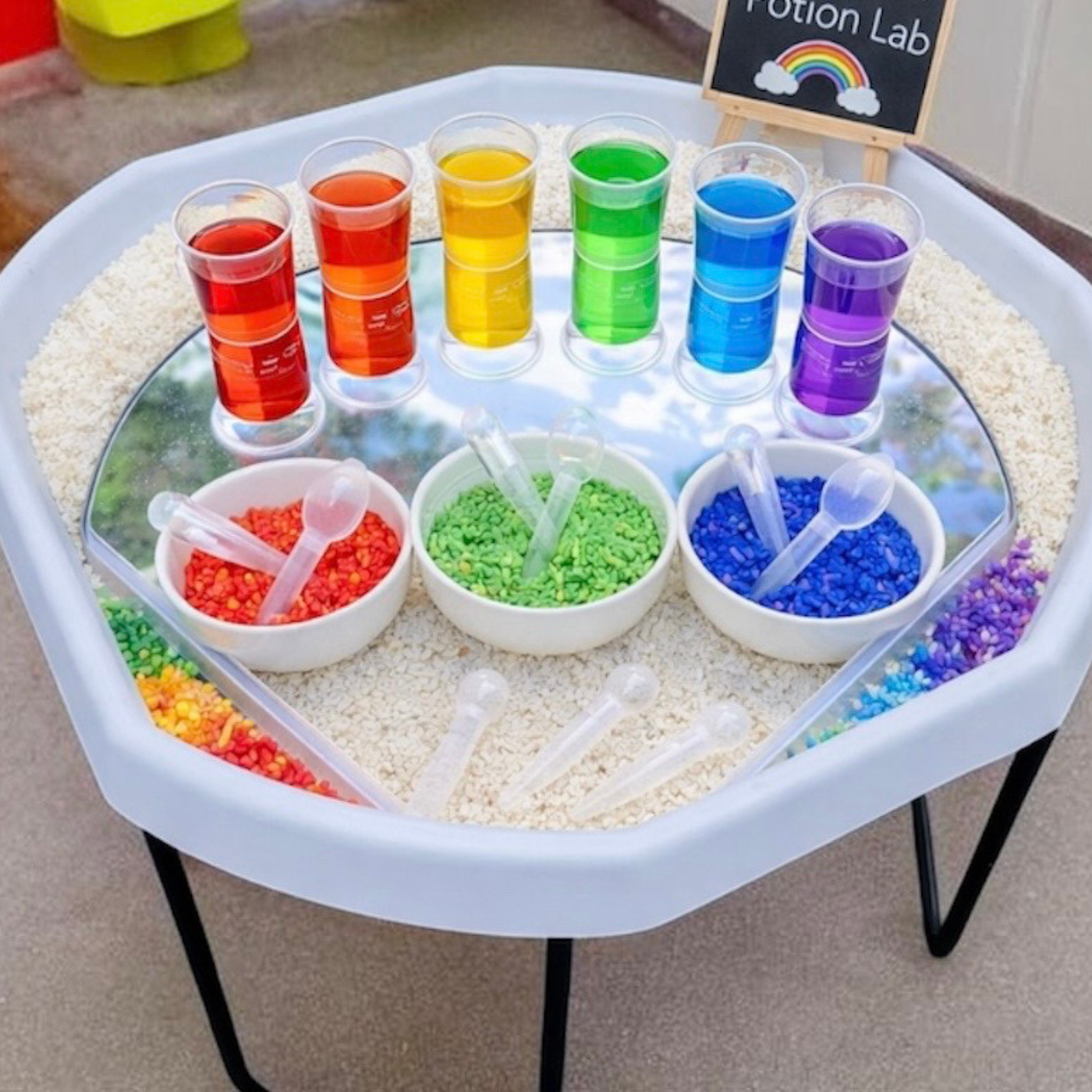
 Tuff tray filled with sensory materials and small toys for rainy day play
1. Sensory Rice Play with Hidden Treasures
Fill the tuff tray with coloured rice or plain white rice dyed with food coloring. Hide small toys, letters, or numbers inside the rice. Children can dig through the rice to find the hidden treasures. This activity supports fine motor skills and sensory exploration.
Materials needed:
- Coloured or plain rice
- Small toys or objects
- Scoops or spoons
How to play:
Spread the rice evenly in the tray.
Bury the small objects in the rice.
Provide scoops or small containers for children to dig and collect items.
This simple setup keeps kids engaged for long periods and encourages language development as they name the objects they find.
2. Water Play with Floating and Sinking Objects
Get the raincoats and gum boots on and embrace the rainy weather. Fill the tray with water and add various objects that float or sink. This activity introduces basic science concepts like buoyancy and density.
Materials needed:
- Water
- Small plastic toys, corks, stones, or metal objects
-
Cups or containers for pouring
How to play:
Fill the tray with water.
Add a mix of objects and ask children to predict which will float or sink.
Let them test their predictions by placing objects in the water.
Water play is calming and helps children understand cause and effect.
3. Nature Exploration with Leaves and Pinecones
Bring the outdoors inside by collecting leaves, pinecones, twigs, and stones. Arrange these natural items in the tuff tray for children to explore textures and patterns.
Materials needed:
- Leaves, pinecones, twigs, stones
- Magnifying glass (optional)
-
Paper and crayons for leaf rubbings
How to play:
Spread the natural items in the tray.
Encourage children to touch and describe the textures.
Use crayons and paper to make leaf rubbings on the side.
This activity connects children with nature and supports vocabulary development.
4. Play Dough and Tool Station
Set up the tuff tray as a play dough station with various tools like rolling pins, cookie cutters, and plastic knives. This encourages creativity and strengthens hand muscles.
Materials needed:
- Play dough in different colours
- Rolling pins, cookie cutters, plastic knives, stamps
How to play:
Place play dough and tools in the tray.
Invite children to create shapes, patterns, or pretend food.
Encourage storytelling about their creations.
Play dough play is excellent for sensory development and imaginative thinking.
5. Construction Zone with Building Blocks
Use the tuff tray as a base for building block play. The tray keeps blocks contained and provides a defined space for construction projects.
Materials needed:
- Building blocks (wooden, plastic, or foam)
-
Small toy figures or vehicles (optional)
How to play:
Fill the tray with blocks.
Challenge children to build towers, bridges, or houses.
Add toy figures to create stories around their structures.
This activity promotes spatial awareness and problem-solving skills.
6. Mini Garden with Soil and Seeds
Create a mini garden in the tuff tray by filling it with soil and planting seeds. This hands-on activity teaches children about plant growth and responsibility. If doing this inside, it is a good idea to put a tarp of some sort or sheet over the floor.
Materials needed:
- Potting soil
- Small seeds (beans, sunflowers, or herbs)
- Water spray bottle
How to play:
Fill the tray with soil.
Help children plant seeds and water them.
Place the tray in a sunny spot and observe growth over days.
This project encourages patience and observation skills.
7. Ice Excavation Adventure
Freeze small toys inside blocks of ice and place them in the tuff tray. Children can use tools like droppers, salt, or warm water to melt the ice and rescue the toys.
Materials needed:
- Small toys
- Water and containers for freezing
- Droppers, salt, warm water
How to play:
Freeze toys inside ice blocks.
Place ice blocks in the tray.
Provide tools for children to melt the ice and free the toys.
This activity combines science with sensory play and problem-solving.
8. Colour Mixing with Paint and Water
Set up a colour mixing station using water, food colouring, and small containers. Children can experiment with combining colours and observe changes.
Materials needed:
- Water
- Food colouring or liquid watercolours
- Small clear containers or cups
-
Pipettes or droppers
How to play:
Fill containers with water and add different colours.
Let children mix colours using droppers.
Discuss the new colours they create.
This activity introduces basic art concepts and encourages experimentation.
9. Storytelling with Small World Figures
Use the tuff tray as a stage for small world play with figures like animals, people, or vehicles. Children can create stories and scenarios, boosting language and creativity.
Materials needed:
- Small world figures (animals, people, vehicles)
-
Natural materials or fabric for scenery
How to play:
Arrange figures and scenery in the tray.
Encourage children to tell stories or act out scenes.
Ask open-ended questions to expand their narratives.
Small world play supports social skills and imaginative thinking.
10. Sensory Gel Bag Exploration
Fill resealable bags with coloured hair gel or aloe vera gel and add small objects inside. Seal the bags tightly and let children squish and move the objects around.
Materials needed:
- Resealable plastic bags
- Hair gel or aloe vera gel
- Small objects like beads or buttons (choking hazard for the littles so maybe keep this one for the big kids)
- Tape to seal edges
How to play:
Fill bags with gel and objects.
Seal and tape edges securely.
Place bags in the tray for tactile exploration.
This mess-free sensory activity is calming and great for fine motor development.